Danny_Raines_System_&_Equipment_Grounding 060426

Utility Protective Grounding: Principles and Safety

Utility Protective Grounding: Principles and Safety System and Equipment Grounding

Instructed By Danny Raines, CUSP
Master Equipotential Work Zones, OSHA 1910.269 Compliance, and Advanced Grounding Theory

Master Equipotential Work Zones, OSHA 1910.269 Compliance, and Advanced Grounding Theory

Register Now

5 HOURS | 5 CUSP POINTS | $399

*Also available as a SCORM file to use on your LMS


Led by Danny Raines, CUSP – a 40-year veteran of Georgia Power, respected utility safety consultant, and contributor to Incident Prevention magazine – this engaging course provides an in-depth look at one of the most critical yet misunderstood aspects of line work: system and equipment grounding.

Using real-world examples, incident case studies, regulatory context, and visual storytelling, Danny shares hard-earned lessons on how improper system and equipment grounding continues to result in fatal or catastrophic contacts, despite decades of available solutions. Participants will gain a clear understanding of OSHA grounding regulations, the principles of equipotential zones, the unseen hazards of induced voltages, and how proper protective grounding techniques can prevent tragic outcomes. This course goes beyond compliance—equipping workers with a mindset of hazard anticipation, better decision-making, and a fundamental understanding of electrical physics to ensure a truly safe work zone.

With humor, humility, and urgency, Danny challenges lineworkers, safety professionals, and leaders to rethink their approach to energized work—especially when it comes to system and equipment grounding—and commit to consistent, effective practices.


Who Should Attend?

  • Electrical Line-Workers & Field Technicians looking to refine absolute safety practices during overhead and underground construction or maintenance.
  • Utility Safety Directors, Managers, and Principal Consultants responsible for company-wide regulatory compliance and fieldwork auditing.
  • Distribution and Transmission Engineering Professionals designing robust personal protective grounding policies.
  • Electrical Foremen and Crew Leads who oversee daily “test-before-touch” validation and temporary ground assembly line-ups.

Register Now

Looking for group pricing? Call us Today at 815-459-1796!

In this course you will learn these objectives when you complete the course:

  • Mitigate Ground Gradients

  • Explain the Physics of Grounding

  • Identify Accidental Energization Hazards

  • Apply OSHA Grounding Regulations

  • Implement Best Practices

  • Evaluate Equipment Specifications

  • Execute Underground Grounding Methods

  • Establish Equipotential Zones

Purchase Course


Course Frequently Asked Questions (FAQ)

  • How does utility protective grounding differ from standard low-voltage electrical grounding in residential or commercial buildings?

    Low-voltage building grounding networks are engineered so that under normal conditions, absolutely no current flows through the grounding path unless a fault condition occurs. In contrast, on active power utility systems, current flow is continuously present on system neutrals, pole assemblies, and equipment grounds. Consequently, utility grounding requires distinct field strategies to safeguard workers against active circulating currents and induction profiles that are completely absent in basic building systems.

  • Does electricity always take the path of least resistance?

    No, this is one of the most common and dangerous myths in the electrical industry. Basic principles of physics show that electricity takes any and all conductive paths available to it in a parallel network. Kirchhoff’s Law of Current Division states that while the majority of the current will route along the path of lowest resistance, a proportional amount of current will concurrently stream through every alternative path—including the human body if it forms a parallel path.

  • What is an Equipotential Work Zone (EPZ) and why is it required?

    An Equipotential Work Zone (EPZ) is an area intentionally created by placing temporary protective grounds and bonds in a specific configuration to ensure that all conductive components within the work area remain at the same electrical potential. By removing differences in electrical potential across the space where the line-worker is located, an EPZ ensures that even if a line accidentally becomes energized, no harmful current can route through the worker’s body.

  • What is the correct sequence for installing and removing temporary protective grounds?

    According to OSHA standard 1910.269(n)(6), when an employee attaches a ground to a line or equipment, they must strictly attach the ground-end connection first and then attach the other end to the phase conductor using an insulated live-line tool. Conversely, when removing a ground, the employee must disconnect the clamp from the line or equipment using a live-line tool before disconnecting the ground-end connection. Ground-end links must always be installed first and removed last to ensure the operator is never placed in series with an ungrounded conductor.

  • Can induced voltage from nearby energized lines be completely “bled off” to earth?

    No. Unlike static electricity, which can be discharged via a temporary link, magnetically and electrostatically induced voltages from parallel active lines create continuous, active charging currents. These currents cannot be permanently bled away; they are continuously generated and remain highly present, often measuring thousands of milliamperes—more than enough to inflict fatal injuries if proper equipotential bonding is omitted.

  • Why is the mechanical length and condition of grounding cables critical to safety?

    Every single mechanical connection, poor contact splice, or corroded strand adds impedance to the temporary grounding system. Furthermore, allowing excessive length in your grounding cables drastically increases the circuit’s total impedance. According to Ohm’s Law (V = I x Z), higher path impedance causes a higher voltage drop across the safety grounds, forcing a significantly larger share of fault current to route through the parallel path of the line-worker’s body. Every extra ohm of resistance engineered into a safety system directly compromises worker protection.

  • What unique hazards exist when working on Underground Distribution (URD) cable neutrals?

    While this 1/3 value is a standard engineering rule-of-thumb for specific 3-phase multi-grounded neutral configurations (where current splits between earth return, adjacent neutrals, and the wire itself), it is not a universal constant. For a single-phase underground residential distribution (URD) loop, the concentric neutral actually carries 100% of that phase’s return current back to the source (minus whatever minor fraction leaks directly into the earth via local ground rods). Stating it strictly as 1/3 across all “normal system loops” is a bit misleading, though the underlying safety warning about open-neutral shock hazards remains completely correct.
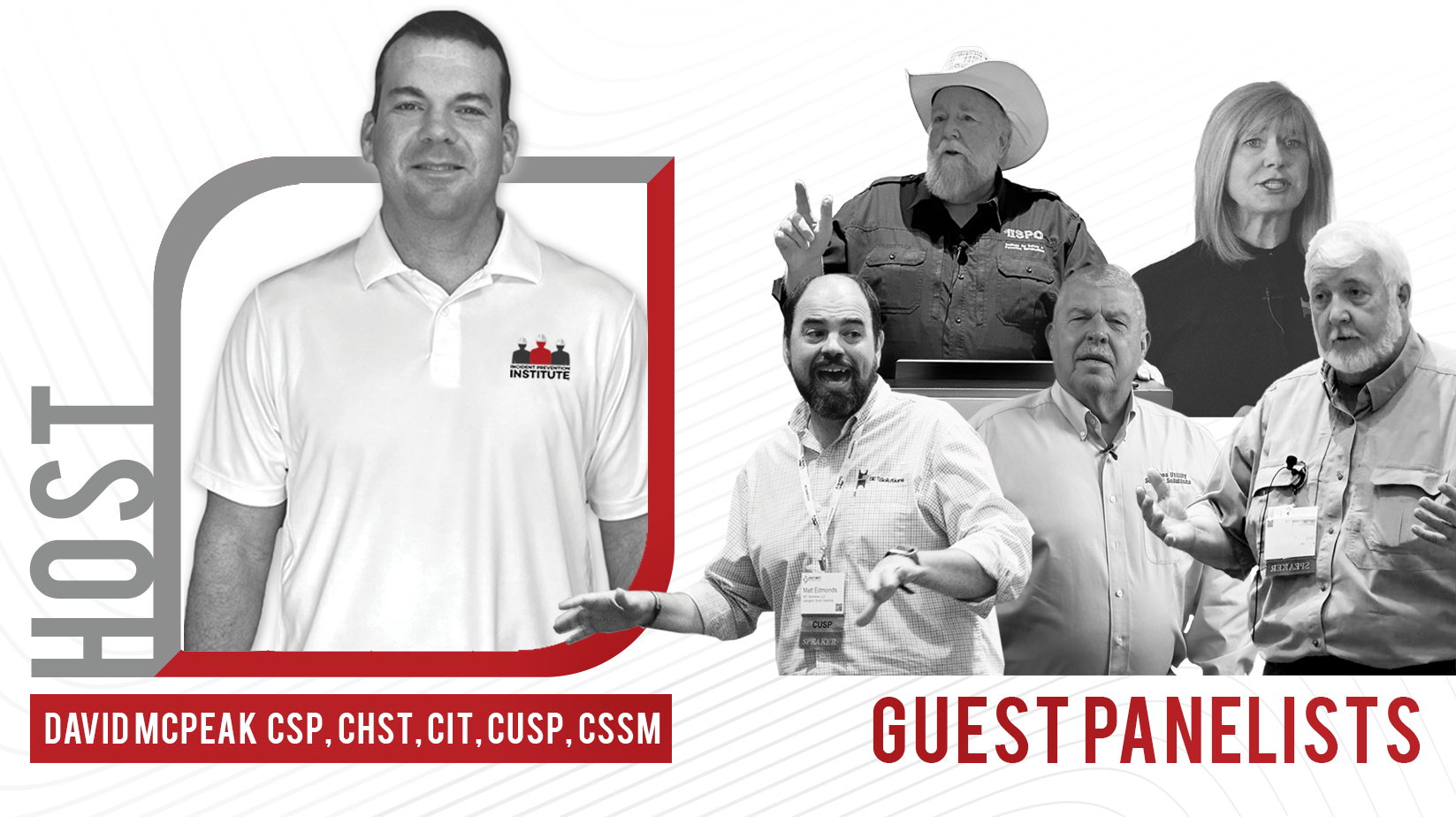
Voice of Experience Podcast

and other iP Podcasts

Listen to Podcast

iPi Panelists

iPi Monthly Forum

Time with Subject Matter Experts for Utility Professionals

1-HR FORUM with industry experts
FEE: COMPLIMENTARY

Register for iPi Forum

Legends of an Ole Lineman

Author Danny Raines

Purchase Danny’s Book

The views, information, or opinions expressed during this webinar are solely those of the individuals involved and do not necessarily represent those of Utility Business Media and its employees. It is strongly recommended you discuss any actions or policy changes with your company management prior to implementation.

LMS Courses, CBT, Home Page, Danny Raines, Promote

Continue reading

Distribution Cover-Up Danny Raines

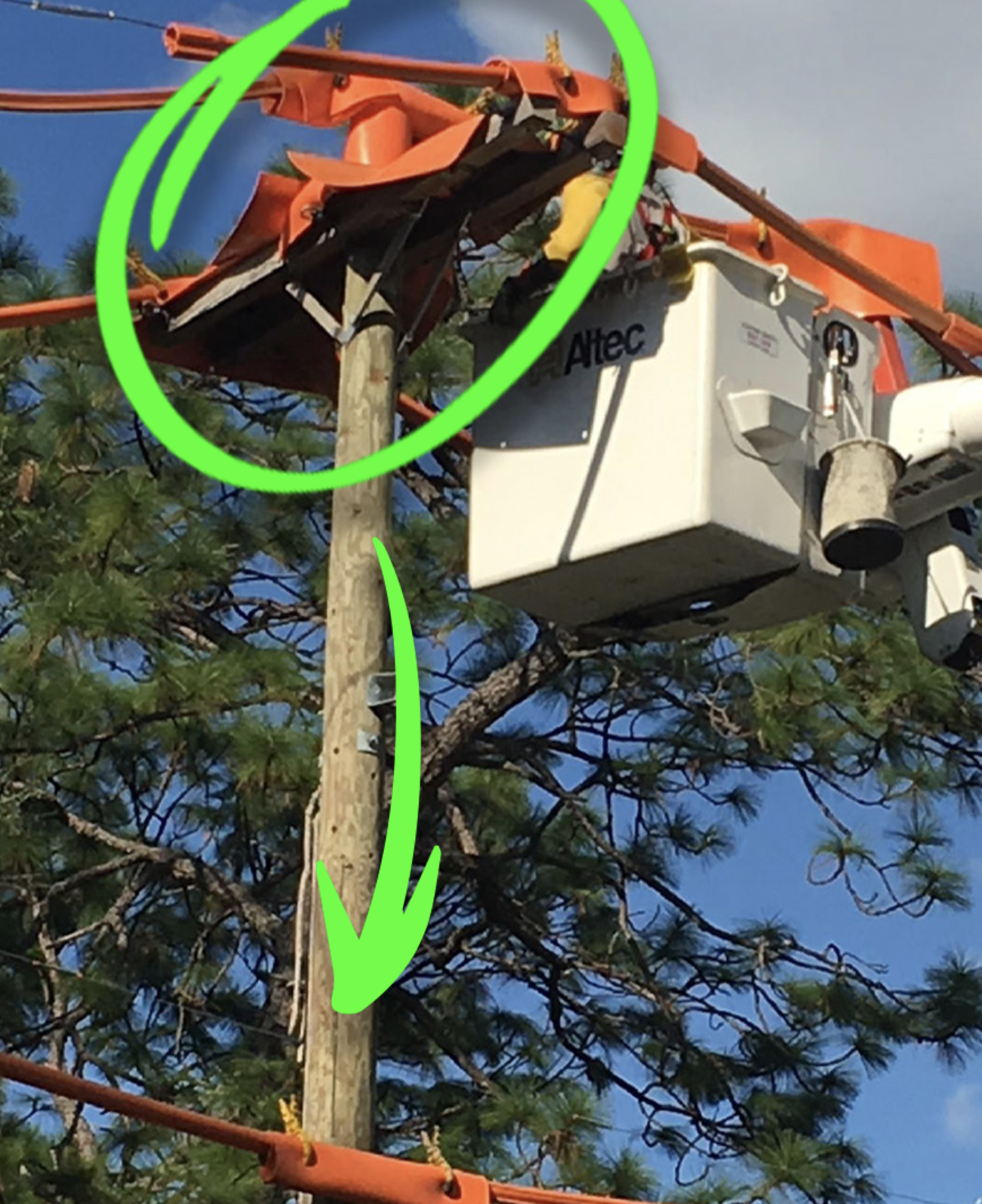
Distribution Cover-Up: Enhancing Electrical Safety Through Proper Protection

Distribution Cover-Up: Enhancing Electrical Safety Through Proper Protection

Instructed By Danny Raines, CUSP


4 HOURS | 4 CUSP POINTS | $299

*Also available as a SCORM file to use on your LMS

Register Now

Led by Danny Raines, CUSP – a 40-year veteran of Georgia Power, respected utility safety consultant, and contributor to Incident Prevention magazine – this engaging course provides an in-depth look at one of the most critical yet misunderstood aspects of line work: distribution cover-up.

Using real-world examples, incident case studies, regulatory context, and visual storytelling, Danny shares hard-earned lessons on how improper cover-up continues to result in fatal or catastrophic contacts, despite decades of available solutions. Participants will gain a clear understanding of OSHA regulations, the hierarchy of controls, minimum approach distances, and how proper cover-up techniques can prevent tragic outcomes. This course goes beyond compliance—equipping workers with a mindset of hazard anticipation, better decision-making, and a simplified rule for self-assessment: “Danny’s Elbow Rule.”

With humor, humility, and urgency, Danny challenges lineworkers, safety professionals, and leaders to rethink their approach to energized work—especially when it comes to phase-to-ground contacts—and commit to consistent, effective cover-up practices.

Looking for group pricing? Call us Today!

Cover Up - Danny Raines

In this course you will learn these objectives when you complete the course:

  • Identify the Leading Causes of Electrical Contacts in Distribution Work

  • Differentiate Between Energized and Ground Potentials

  • Interpret OSHA 1910.269 Standards and Their Practical Implications

  • Implement the “Elbow Rule” to Evaluate Personal Safety Zones

  • Recognize Behavioral Contributors to Unsafe Cover-Up Practices

Proper cover-up is deliberate protection, not just habit. This course teaches the principles and methods needed to recognize hazards, apply effective cover, and prioritize safety on every energized job.

SIGN UP TODAY!

Learn the critical principles of safe, effective cover-up in electrical distribution work with veteran lineman and safety consultant Danny Raines, CUSP. This practical course combines real-world case studies, regulatory requirements, and proven field techniques to help lineworkers prevent phase-to-ground contacts and fatalities. Participants will gain essential skills in applying cover-up correctly, understanding OSHA 1910.269 rules, and adopting safer habits to ensure everyone goes home safe every day.

Distribution Cover-Up Danny Raines

ABOUT THE PRESENTER

Danny Raines, CUSP - Distribution Cover-Up

Danny Raines, CUSP

He began his career in the electrical utility industry in June 1967 in Macon, Georgia with Georgia Power Company. Served a short time in the U. S. Army in 1968-69 and is a Viet Nam Era disabled veteran. Returning to Georgia Power worked as a lineman until till1985. Worked as contract coordinator over utility crews and line clearing forestry. In late 1996, Danny entered Safety and Health, promoted to Supervisor, Project Manager, and Corporate Safety Consultant for Distribution and Transmission organizations.

Danny retired from Georgia Power on December 1st, 2007, as the Safety Consultant for Distribution and Transmission organizations and founded Raines Utility Safety Solutions, LLC.

Danny is currently an Affiliate Instructor at Georgia Tech Research Institute in Atlanta, Ga., an electric utility Subject Matter Expert and Consultant in civil cases, supporting electrical Contractors, Co-Ops, and Municipal utility companies across the US.

The views, information, or opinions expressed during this webinar are solely those of the individuals involved and do not necessarily represent those of Utility Business Media and its employees. It is strongly recommended you discuss any actions or policy changes with your company management prior to implementation.
Promote, CBT, Home Page, Danny Raines

Continue reading

Situational Awareness Cover Image

A TIPs & Tactics Short Course Situational Awareness in the Field

A TIPs & Tactics Short Course: Situational Awareness in the Field

PRESENTED BY JIM WILLIS, MSc, CMAS, CHS1


This course helps you develop essential skills in situational awareness, enabling you to identify and process critical environmental information, stay vigilant, and maintain safety in dynamic or hazardous field environments.

1 HOURS | 1 CUSP POINTS | $50

*Also available as a SCORM file to use on your LMS

Register Now

Looking for group pricing? Call us Today!

Situational Awareness Question

In this course you will learn these objectives when you complete the course:

  • Define Situational Awareness

  • Recognize Critical Elements

  • Apply Awareness Techniques

  • Enhance Security Skills

  • Adapt to Dynamic Environments

Situational awareness is a vital skill, not just instinct. This course introduces the principles and strategies needed to stay alert, assess environments, and prioritize safety in the field.

SIGN UP TODAY!

ABOUT THE PRESENTER

Jim Willis headshot

James Willis, MSc, CMAS, CHS1

Jim Willis is a credentialed security expert and anti-terrorism specialist. He is an experienced electrical engineer and international development professional that has worked in more than 37 developing countries, including conflict and post-conflict areas of Cambodia, Ethiopia, and South Sudan. He spent six years in Afghanistan as a Theater Operations Director leading security operations, training, and reconstruction efforts. Jim’s security expertise is founded on the ground combat-zone experience supplemented with training from the US Defense Security Service, the United Nations Dept. of Safety & Security, and the Naval Postgraduate School Center for Homeland Defense and Security.

Jim’s utility expertise started after a tour of duty with the Navy during the waning days of the Vietnam War, Jim began a life-long utility-focused career that has taken him from lineman to graduate electrical engineer and to utility manager. He has held a myriad of positions in distribution and transmission electric power systems.

Using his in-depth knowledge of electric power systems and utilities, combined with his expertise in security Jim developed “ASSIST”©, a proprietary active shooter and violence prevention training series.

Jim’s education includes a bachelor’s degree in Electrical Engineering and a master’s degree in International Development and Security.

Jim is an active member of –

  • Institute of Electrical and Electronics Engineers (IEEE)
  • Society for International Development (SID-Washington)
  • International NGO Safety and Security Association (INSSA)
  • International Association Counterterrorism & Security Professionals (IACSP)
  • National Utility Training and Safety Education Association (NUTSEA)

The views, information, or opinions expressed during this webinar are solely those of the individuals involved and do not necessarily represent those of Utility Business Media and its employees. It is strongly recommended you discuss any actions or policy changes with your company management prior to implementation.

CBT, Jim Willis

Continue reading

Core Compliance Package

10 COURSES
10 HOURS SELF-PACED ONLINE LEARNING
$99

Each of the ten computer based courses in the package contains video lessons, knowledge checks, and a quiz that must be passed to obtain a certificate of completion for your training records. These courses align with regulatory knowledge requirements and are perfect for orientation and refresher training.

Promote, CBT, matt edmonds

Continue reading

The Art of Safety

SELF-PACED ONLINE LEARNING
4 HOURS | EARN 4 CUSP POINTS
$99

Safety is an art and a science. How and why to understand, lead, develop, and protect people is the art of safety and the purpose of this course. It contains video lessons, exercises, scenarios, and a workbook. In it you will learn how to generate solutions that optimize culture, people, and systems that will energize and sustain exceptional safety. After completing the course, you will be a C5 Safety Leader that focuses on leading and protecting people rather than managing robots and pleasing systems.

LMS Courses, CBT, Home Page, David McPeak, Promote

Continue reading

Heat Stress

SELF-PACED ONLINE LEARNING
EARN 1 CUSP POINT
$70

Much of your work occurs outdoors exposing you to hazards associated with heat. This course explains how to protect yourself from common heat illnesses along with identifying their symptoms and treatments. It covers how heat affects your normal body function and why heat illnesses happen. This is a must attend course for anyone with heat exposure, especially those working in hot and humid climates.

Promote, CBT, matt edmonds

Continue reading

Job Briefings – LMS Course

COMPUTER BASED COURSE WITH DAVID MCPEAK
EARN 2 CUSP POINTS
$175/

Job Briefings outlines a complete cycle that includes pre and post job briefings and two-minute drills along with requisite knowledge and skills required to conduct effective briefings. The course proposes multiple purposes of briefings that will make them more than monotonous work planning tools resulting in an empowered team that communicates effectively. This course is a must for anyone that conducts, develops, evaluates, or participates in job briefings.

Promote, LMS Courses, highlight

Continue reading

Unnormalizing Deviation

SELF-PACED ONLINE LEARNING
EARN 2 CUSP POINT
$150

Risk tolerance tends to have a compounding and exponential effect over time through a phenomenon known as normalization of deviation (NOD). This course starts by exploring factors that contribute to NOD and explains how you can identify when it is occurring. It then details principles and strategies you can use to overcome NOD and accurately identify hazards and risks with full situational awareness, ultimately unnormalizing deviation.

David McPeak, Promote, CBT

Continue reading

How to De-escalate Conflicts in the Field

SELF-PACED ONLINE LEARNING
EARN 3 CUSP POINT
$125

This training session introduces the skills and approaches needed for effective conflict de-escalation. For utility workers, de-escalating volatile situations in the field takes unique skills and approaches that typical de-escalation training just doesn’t address. They need proactive skills which help them understand - when to engage, how to engage, and when to escape the situation.

Promote, CBT, Jim Willis

Continue reading